

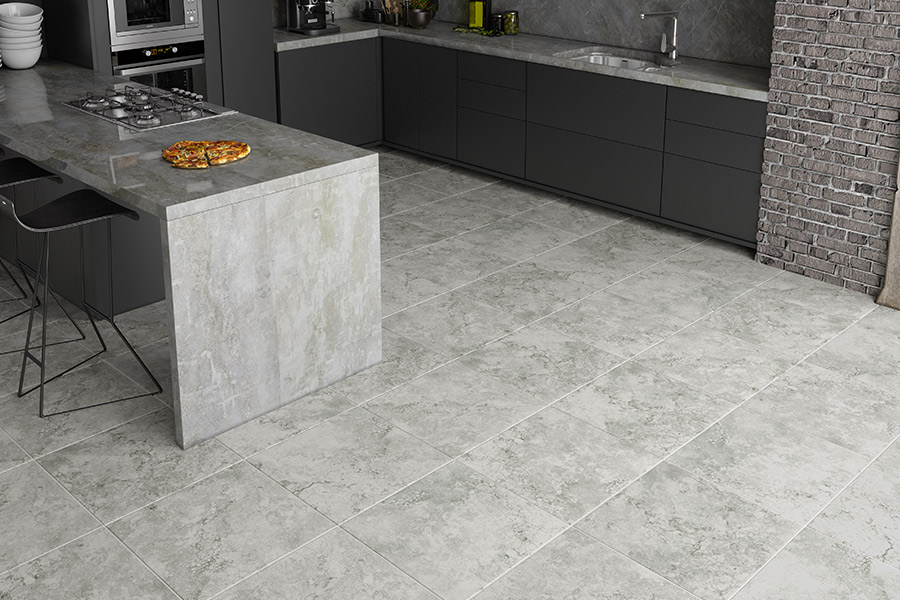
Kitchens demand more from your floors than almost any other space in your home, which is why choosing the right material matters so much. Heat, spills, heavy foot traffic, and the occasional dropped pan all happen here on a daily basis. Because of this, many homeowners ask us a straightforward but important question when they visit Enchantment Carpet: what tile flooring actually performs best in a kitchen?
The answer depends on your lifestyle, your design preferences, and how much maintenance you are willing to take on. However, there are clear options that consistently rise to the top. Let us walk through them in a way that helps you make a confident and informed decision.
What makes tile flooring ideal for kitchens?
Tile flooring continues to be one of the most popular choices for kitchens, and there are several strong reasons behind that popularity.
First, tile handles moisture extremely well when it is installed correctly. Kitchens are prone to spills, splashes, and humidity, so having a surface that resists water is essential for protecting your subfloor.
Second, tile offers impressive durability. It can withstand heavy foot traffic, resist scratches, and handle everyday wear without losing its appearance.
Third, tile is easy to maintain. Most tile floors only require regular sweeping and occasional mopping, which makes them practical for busy households.
Finally, kitchen floor tiles provide exceptional design flexibility. Whether you prefer a sleek modern look or a warm, rustic feel, there is a tile option that can match your vision.
What type of tile flooring is best for kitchens?
When helping homeowners in Albuquerque choose tile flooring, we typically focus on four main types. Each option offers unique benefits, and one may suit your needs better than the others.
Porcelain tile
Porcelain tile is often considered the top choice for kitchen flooring because of its strength and performance.
It is denser than most other tile options, which makes it highly resistant to water and less likely to absorb moisture. This quality makes porcelain an excellent fit for kitchens where spills are common.
Porcelain tile also resists scratches, stains, and general wear, which makes it ideal for households with pets or high traffic. In addition, it comes in a wide variety of styles, including options that mimic hardwood or natural stone.
Ceramic tile
Ceramic tile is another strong option that offers a balance between performance and affordability.
Although it is slightly less dense than porcelain, it still performs well in most kitchen environments. It resists moisture, handles daily use, and comes in a broad range of colors and patterns.
Ceramic tile is also easier to cut and install, which can help reduce installation costs. For homeowners who want a reliable and cost-effective solution, ceramic tile is a practical choice.
Natural stone tile
Natural stone tile delivers a unique and high-end appearance that cannot be replicated exactly by manufactured materials.
Options such as marble, travertine, slate, and granite each bring their own texture and character to a kitchen. This creates a one-of-a-kind look that adds depth and elegance to the space.
However, natural stone does require more maintenance. It needs to be sealed regularly to protect against moisture and stains, and it can be more sensitive to spills. For homeowners who value aesthetics and are willing to maintain the surface, natural stone can be a beautiful investment.
Wood-look and stone-look tile
Many homeowners want the appearance of hardwood or natural stone without the added maintenance. This is where luxury look tile comes into play.
Porcelain tiles that mimic wood grain or stone textures provide the visual appeal of natural materials while maintaining the durability of tile. This option has become increasingly popular in Albuquerque homes because it offers both style and practicality.
Is porcelain or ceramic tile better for kitchen floors?
Choosing between porcelain and ceramic tile often comes down to your priorities.
Porcelain tile generally offers better durability and water resistance, which makes it ideal for busy kitchens that see frequent use.
Ceramic tile is more budget-friendly and still performs well in most situations, especially in kitchens with moderate traffic.
In general, porcelain is the better option for maximum performance, while ceramic is the better option for staying within a specific budget.
What tile finish is best for kitchens?
The finish of your tile flooring plays a key role in both safety and appearance.
Matte finishes are typically the best choice for kitchens because they provide better slip resistance. This feature is especially important in areas where water or spills are likely.
Glossy finishes can reflect light and make a kitchen feel brighter, but they can also be more slippery and show smudges or water spots more easily.
Textured finishes offer additional grip and visual interest, although they may require slightly more effort to clean.
For most homeowners, a matte or lightly textured finish provides the best balance between function and style.
What size tile works best in a kitchen?
Tile size can significantly impact both the look and functionality of your kitchen floor.
Large-format tiles create a clean and modern appearance. They also reduce the number of grout lines, which can make cleaning easier.
Smaller tiles or mosaic patterns can add detail and visual interest, but they introduce more grout lines, which may require more maintenance over time.
In many cases, larger tiles are preferred because they offer a streamlined look and simplify upkeep.
How important is grout in kitchen tile flooring?
Grout is an essential part of any tile installation, even though it is often overlooked.
High-quality grout helps seal the gaps between tiles and prevents moisture from reaching the subfloor. It also contributes to the overall appearance of the floor.
Darker grout colors can help hide stains and wear, while lighter grout can create a brighter and more seamless look.
We recommend sealing grout in kitchen applications because it adds an extra layer of protection and helps extend the life of your flooring.
How do you maintain kitchen floor tiles?
Tile flooring is known for being low-maintenance, but following a simple care routine will help keep it looking its best.
Sweep or vacuum regularly to remove dirt and debris
Mop with a mild cleaner to maintain a clean surface
Wipe up spills promptly to prevent staining
Reseal grout periodically to maintain protection
If you choose natural stone tile, you will also need to use cleaners designed specifically for stone and reseal the surface as recommended.
Your home for top-quality tiles in Albuquerque, NM
For many homeowners, porcelain tile is the best all-around choice because it combines durability, water resistance, and design versatility.
However, the best option for your kitchen ultimately depends on your lifestyle, your budget, and your design goals.
When you visit Enchantment Carpet, we take the time to understand your needs and help you explore the options that make the most sense for your home. We believe that choosing the right tile flooring should feel simple and confident, not overwhelming. Our tile shop in Albuquerque, NM, serves Albuquerque, NM, and the surrounding areas. Get in touch with us today!


